


International Multidisciplinary Scientific Conference
“Institutions, Governance, and Sustainable Economic Transformation” - IGSET 2026
Date: November 7-8, 2026
Venue: Central University of Europe, Kutaisi, Georgia
Organizer:
 | Central University of Europe (Kutaisi, Georgia) |
Co-organizers:
 | European University (Tbilisi, Georgia) |
 | Samtskhe-Javakheti State University (Akhaltsikhe, Georgia) |
 | Georgian Technical University Ir. Zhordania Center of Studying Productive Forces and Natural Resources of Georgia (Tbilisi, Georgia) |
 | PAR University of Applied Sciences (Croatia) |
 | University "St. Kliment Ohridski" Bitola, Faculty of Economics – Prilep (North Macedonia) |
 | Odesa State Agrarian University (Ukraine) |
About the Conference
The International Scientific Conference IGSET 2026 is dedicated to the comprehensive examination of institutional and governance factors in the process of economic transformation in transition and developing economies. The conference brings together scholars from multiple disciplines-including economics, political science, law, sociology, and public administration-to discuss contemporary challenges and mechanisms of sustainable development.
The primary objective of the conference is to foster the advancement of scientific research. It aims to provide a platform for scholars, academic staff, experienced and early-career researchers, including doctoral candidates, operating at both national and international levels, to present their research to a broad audience. The conference further seeks to promote the exchange of knowledge, research findings, and professional experience. It offers a multidisciplinary forum for researchers and practitioners to present and discuss recent innovations, emerging trends, existing challenges, as well as practical issues and policy responses.
Thematic Areas
The conference welcomes submissions in the following areas:
- Institutional change and comparative institutional analysis
- Political economy of reforms and structural transformation
- Quality of governance, state capacity, and regulatory systems
- Macroeconomic policy under institutional constraints
- Law, regulation, and economic development
- Sustainable and “green” transformation in developing economies
- Development economics
- Comparative political economy
- Finance and financial systems in institutional and regulatory contexts
- Management and organizational governance in transition economies
- Marketing, market institutions, and consumer behavior
- Tourism development, tourism policy, and sustainable tourism governance
- Education policy, human capital development, and skills formation in the context of institutional and economic transformation
- Sectoral economics, sectoral policy, and structural change in the context of institutional and economic transformation
- Agricultural Economics, Agrarian Policy, and Rural Development in the Context of Institutional and Economic Transformation
- Quantitative and qualitative research methods for studying transition economies
- Multidisciplinary approaches to the study of institutions and governance
Participation Format
Participation in the conference is primarily in-person.
International participants may, if they wish, attend remotely.
Working Languages
- Georgian
- English
Conference Regulations
- Presentation: 12–15 minutes
- Discussion: 8–10 minutes
Participation Fee
Participation in the conference is free of charge. Participants are responsible for covering their own travel and accommodation expenses.
Publication Opportunities
Prior to the conference, a printed program including a book of abstracts will be published.
Conference proceedings will be made available electronically on the official website of the Central University of Europe and in its institutional repository. Each paper will be assigned a unique DOI identifier.
Selected papers in English will be recommended for publication in:
- A special issue of an international scientific journal (subject to successful completion of the peer-review process)
- The peer-reviewed conference proceedings
Important Dates
- Submission of papers: no later than September 20
- Notification of acceptance/rejection: no later than October 1
Submission Guidelines
- Submissions must be relevant to the conference themes.
- Papers must not have been previously published or submitted to another conference.
- The number of co-authors must not exceed three (including the author).
- Only submissions by individuals holding an academic degree or by doctoral candidates are accepted. Papers authored (including co-authored) by master’s students or undergraduate students are not eligible.
- Each participant may submit only one paper (including co-authorship).
Authors are required to prepare their papers in accordance with a designated template. The template must be downloaded in Word format from the official conference website, completed in full compliance with the prescribed structure, and submitted via email. The submitted paper must strictly adhere to the template; any modification to its format, sections, or structure is not permitted.
Papers must be submitted within the specified deadlines to the email address of the Research Institute of Economics at the Central University of Europe: rie@cue.edu.ge
Citation Style
References must follow the APA citation style guidelines. For further details, see: https://apastyle.apa.org/
Anti-Plagiarism Policy
Plagiarism is strictly prohibited. Authors are responsible for ensuring accurate and proper citation of all sources used in their work. All submitted papers will be screened using specialized plagiarism detection software.
Any matches identified by the software will be evaluated on a case-by-case basis by the Chair of the Scientific Committee (and, if necessary, in consultation with the committee). If the similarity index exceeds the acceptable threshold, the author will be notified, and the paper will not be accepted for the conference.
If plagiarism is identified in a published paper by a third party, the claimant is entitled to обратиться to the Scientific or Organizing Committee and request an investigation, including submission of evidence from plagiarism detection software. In the event that plagiarism is confirmed, an official notice will be issued.
Paper Acceptance/Rejection Procedure
Acceptance of a paper for presentation at the conference is conditional upon successful completion of a double-blind peer review process. Reviewers for each submission are selected by the Chair of the Scientific Committee in consultation with committee members. Reviewers are scholars affiliated with various universities whose academic expertise and research profiles align with the subject matter of the submitted paper. A paper is accepted on the basis of two positive reviews.
Following submission within the specified deadlines, papers undergo an initial screening to verify compliance with technical requirements and relevance to the conference themes. Submissions that do not meet these criteria are not considered further, and authors are notified accordingly.
The next stage involves plagiarism screening by specialized software. In cases where plagiarism is detected, the submission is rejected, and the author is informed.
Upon successful completion of the preliminary stages, reviewers are assigned and the paper is forwarded for evaluation. Based on the reviewers’ reports, the Scientific Committee makes one of the following decisions and notifies the author:
- Acceptance of the paper;
- Rejection of the paper;
- Request for revisions.
If revisions are requested, the author is provided with comments and a specified period to resubmit a revised version of the paper. Failure to resubmit within the given timeframe results in automatic rejection. Upon resubmission, the Scientific Committee reassesses the paper to determine whether the comments have been adequately addressed and makes a final decision regarding acceptance or rejection.
The maximum evaluation score is 100 points. A review is considered positive if the paper receives at least 60 points, based on the following criteria (each criterion carries a maximum of 20 points, with a minimum threshold of 10 points per criterion): relevance of the topic; consistency of conclusions with research objectives; degree of scientific novelty; theoretical, applied, and practical significance of the research; structure of the text and adherence to academic citation standards.
Communication with Author(s)
All communication with the author(s) will be conducted via the email address provided at submission.
The submission date is defined as the timestamp of the email sent by the author.
A notification is considered duly delivered at the moment it is sent from the official email address of the conference organizers, regardless of other circumstances.
Open Science Policy
The Central University of Europe is committed to promoting the principles of open science, including open access to research data, scientific publications, and research methodologies, as well as the use of open-source tools, standards, and interfaces. The university employs open publishing instruments to enhance the impact of research, development, and innovation.
Within the framework of the conference, research data, scientific publications, presentations, and applied methodologies are made publicly accessible. The Central University of Europe ensures that its processes, information systems, and support mechanisms enable the implementation of the FAIR principles (Findability, Accessibility, Interoperability, and Reusability). The university reaffirms its commitment to the principles of the Budapest and Berlin Declarations on Open Access.
Copyright
Moral (non-property) copyright remains with the author(s).
Authors grant the conference organizers an exclusive license, which includes rights for print and electronic publication, translation, and visual adaptation. Authors retain the right to revise and reproduce their work, provided that the conference is acknowledged as the original source of publication.
Conference materials will be published under the Creative Commons Attribution (CC BY) 4.0 license. This permits use for any purpose, including commercial use, provided proper attribution is given. Any user is entitled to share, distribute, and reproduce the publication or any part thereof, subject to full citation of the source and indication of any modifications made.
Authors bear full responsibility for the content of their submissions. The Scientific Committee and conference organizers are not liable for any harm caused to authors and/or third parties arising from the publication.
Submission of a paper to the conference constitutes acceptance of all the above terms and conditions.
Additional Provisions
The Central University of Europe places strong emphasis on adherence to ethical standards in research. The university has developed a set of ethical guidelines for research in the social sciences, based on applicable regulations, relevant European legislation, international conventions, and declarations. These guidelines reflect and align with the ethical norms, principles, and standards recognized within the European Research Area.
The university regards equality as a fundamental component of quality in education and research. It has adopted a Gender Equality Strategy and Action Plan aimed at ensuring the systematic integration of gender equality principles at both institutional and cultural levels, across teaching, research, and governance. The structure and approach of this plan are aligned with the European Commission’s Gender Equality Strategy and the core principles and recommendations of the European Research Area, taking into account the specificities of gender equality in administration, education, research, and innovation.
Contact Person
Gocha Ugulava - Associate Professor at the Central University of Europe, Head of the Research Institute of Economics, Coordinator of the Conference Organizing Committee
Email: rie@cue.edu.ge
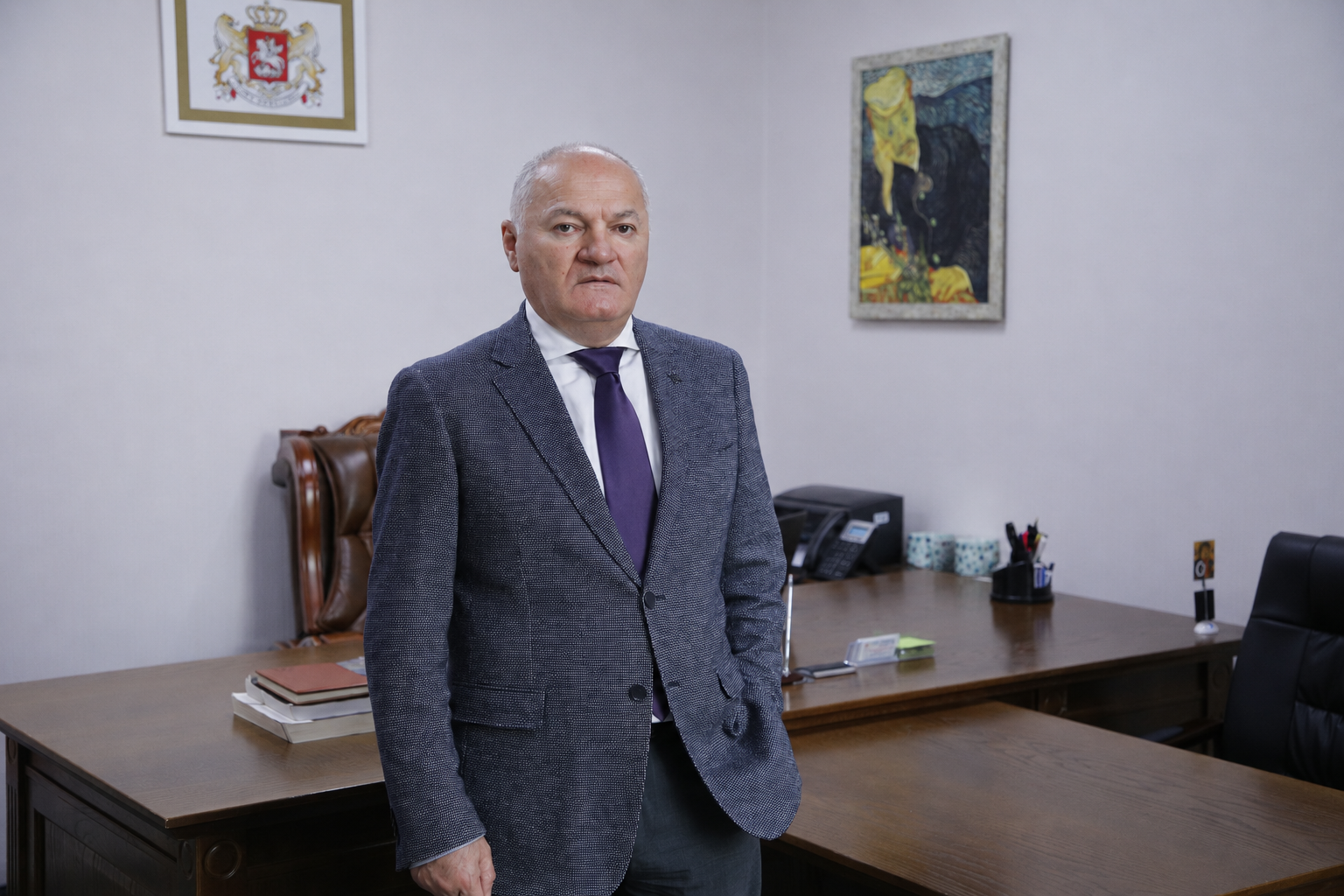
Dear colleagues, distinguished scholars, researchers, and honored guests,
On behalf of the Central University of Europe, it is a privilege to welcome you to the International Scientific Conference IGSET 2026 - “Institutional Governance and Socio-Economic Transformation.”
Today, societies across the world are experiencing rapid and complex transformations driven by technological change, geopolitical uncertainty, institutional reforms, and evolving socio-economic realities. In such conditions, the study of governance systems, institutional capacity, and development strategies becomes not only academically significant, but also critically important for shaping sustainable and inclusive futures.
IGSET 2026 has been established as a multidisciplinary platform where researchers and practitioners from different countries and academic traditions can exchange ideas, present innovative research, and engage in thoughtful discussion on the challenges facing transition and developing economies. The conference reflects our shared understanding that meaningful solutions to contemporary global and regional problems require cooperation across disciplines, institutions, and borders.
We are especially proud that this conference brings together experts from economics, political science, law, sociology, public administration, and related fields. Such intellectual diversity creates opportunities for deeper analysis, comparative perspectives, and the development of practical policy-oriented approaches to institutional and socio-economic transformation.
I would also like to emphasize the importance of supporting emerging scholars and doctoral researchers. Academic progress depends on the ability of new generations of researchers to contribute fresh perspectives, challenge existing assumptions, and expand the boundaries of scientific inquiry. We are pleased that IGSET 2026 provides a space where both experienced academics and young researchers can participate in a productive and inspiring exchange of knowledge.
The Central University of Europe remains committed to strengthening international academic cooperation and promoting research that contributes to public understanding, institutional development, and social progress. Hosting conferences such as IGSET 2026 represents an important part of this mission.
I sincerely hope that the discussions and collaborations initiated during this conference will lead to new research partnerships, innovative projects, and valuable scientific contributions with lasting impact.
Thank you for joining us and contributing to the success of IGSET-2026.
I wish all participants an inspiring, productive, and memorable conference experience in Kutaisi.
Sincerely,
Professor Gocha Tutberidze
Rector, Central University of Europe